A. Gosselin, J. Warszawski, N. Bajos
Contributing partner:
INSERM, Paris
Scientific article available at:
“European Journal of Public Health”

A Horizon 2020 cohort
A. Gosselin, J. Warszawski, N. Bajos
Contributing partner:
INSERM, Paris
Scientific article available at:
“European Journal of Public Health”
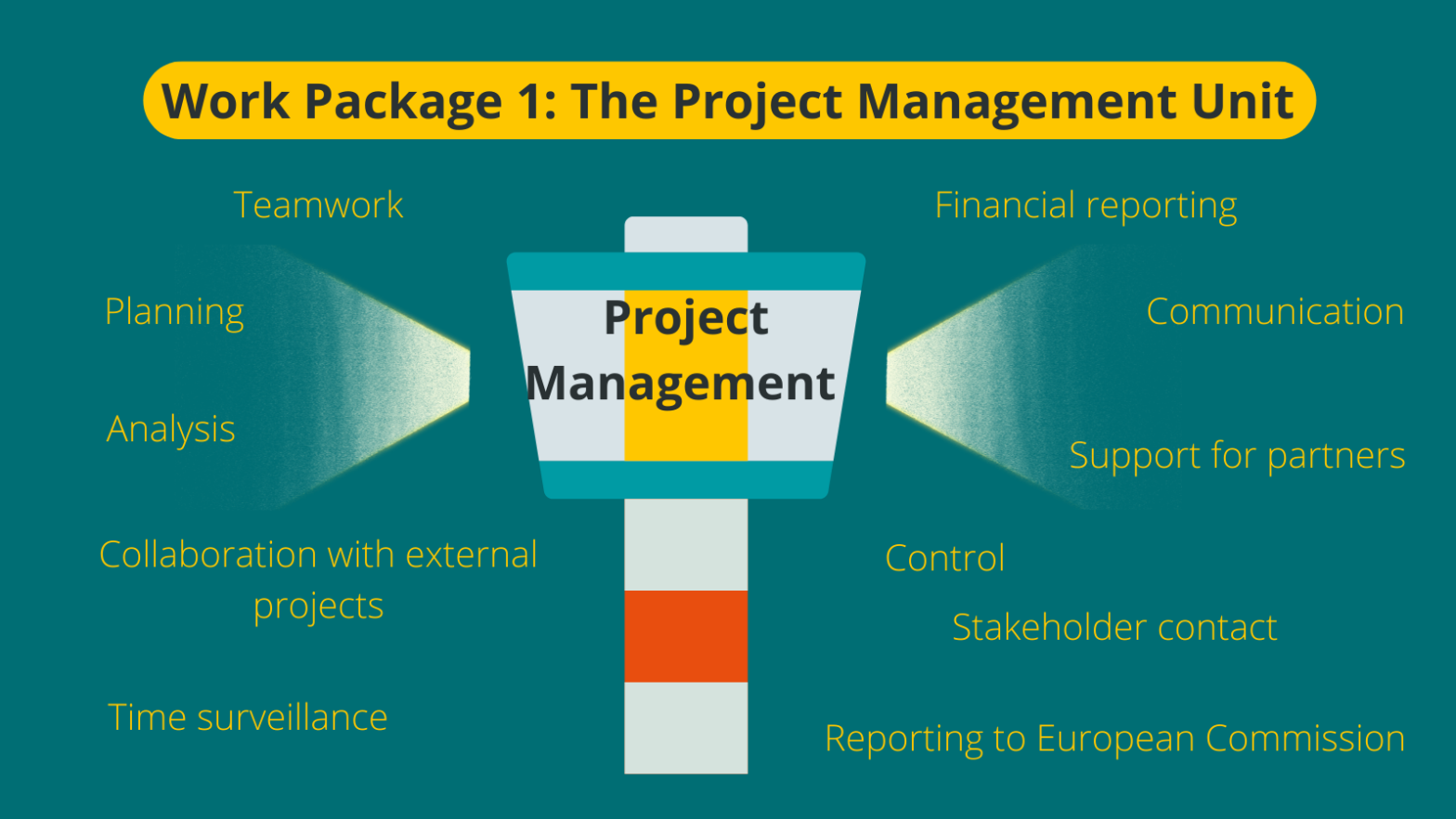
ORCHESTRA’s mission is to bring together European and international partners in order to create larger cohort research for collaborating on a clearer picture of COVID-19 to find evidence based medical recommendations. 37 partners from 15 countries join work forces to achieve this goal. Only a well organised research infrastructure with common standards can facilitate serious research of this size. International teams of specialists from different professional backgrounds are assigned to eleven work packages – each entrusted with important tasks (which inspired the project’s name ORCHESTRA). Obviously, this endeavour requires a great amount of coordination, which is in the hands of Work Package 1 (WP1), the project management unit.
WP1 is ORCHESTRA’s “ground control” and provides continuous support to the partners in all aspects of project management, supervises adherence to the Grant Agreement, Consortium Agreement and Publication Policy, facilitates the flow of information between the ORCHESTRA partners and the many stakeholders. Currently, WP1 is also working on the internal financial reporting. This is a valuable practice for helping partners monitor their expenditure and it will facilitate partners when it comes to the official financial reporting activity to the European Commission due this summer. The next important task will be the official project reporting to the European Commission, requiring all the partners to report financial expenses and scientific activities performed in the first 18 months of the project. The team of WP1 describes their work challenge: “Coordinating such a big Consortium is a continuous challenge given the changes and adjustments needed to keep the project updated with the constantly evolving epidemiological situation. These changes indeed have impacted not only the scientific research but also the administrative and financial management of the project.”
The lead of this work package has a team from the University of Verona.
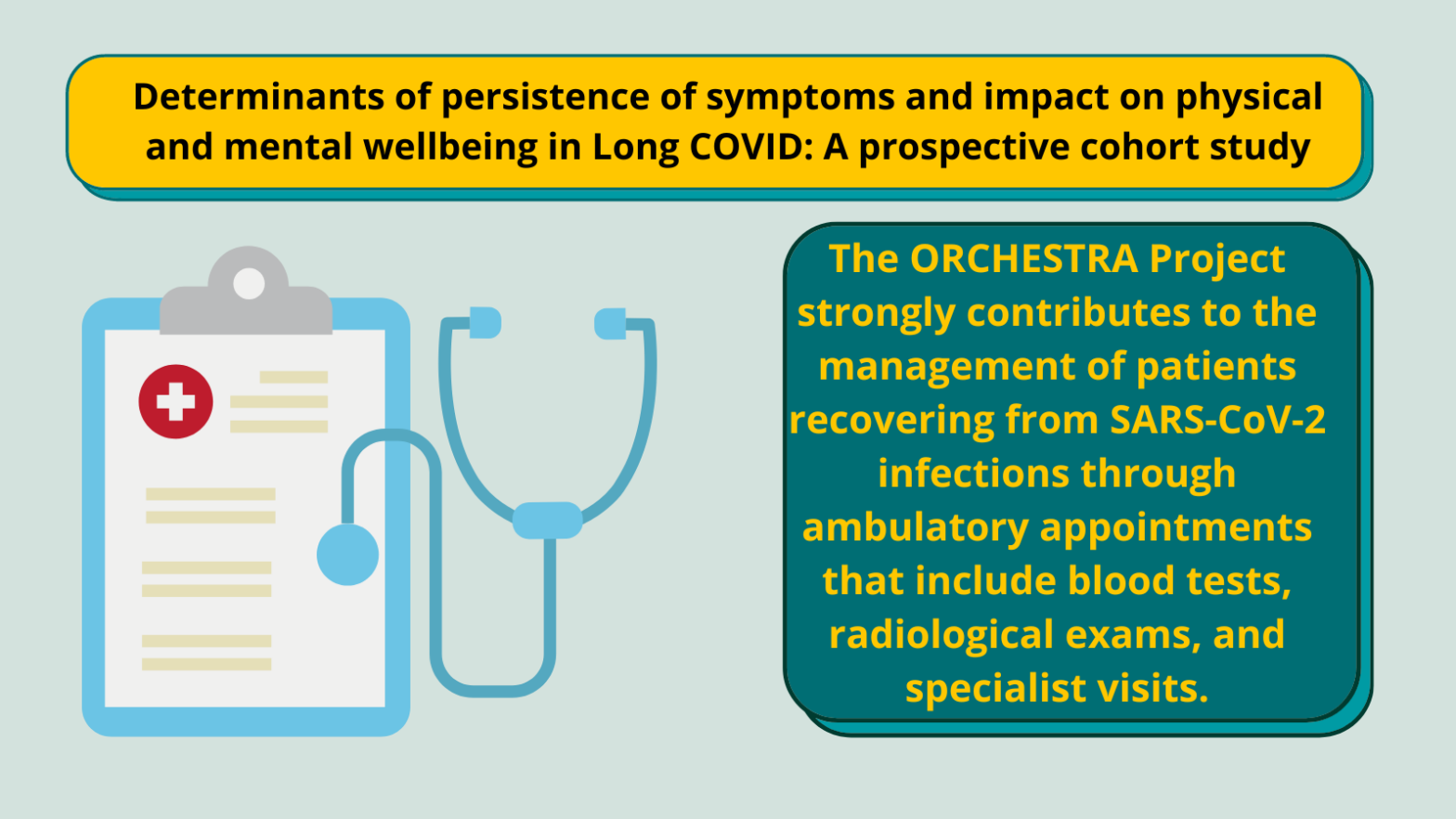
The persistence of symptoms after infection with SARS-CoV-2 can last for many months and has been defined as a clinical entity called Long COVID. Long COVID affects patients with numerous symptoms such as fatigue, headaches, breathing difficulties, difficulty concentrating (“brain fog”), chest pain and many more, which impair daily life. “Determinants of symptom persistence and impact on physical and mental well-being in long COVID: A prospective cohort study” is a study investigating the health status of patients after COVID-19 infection. The University of Verona (Italy) enrolled over 400 patients who were hospitalised or treated at home for COVID-19 and whose symptoms, particularly muscle pain, fatigue and breathing difficulties, persisted for up to 9 months after the acute illness. Physical and psychological well-being was influenced by the duration and number of symptoms, and factors such as ICU hospitalisation and age had an impact favouring Long COVID. Our findings encourage follow-up of patients at risk of Long COVID. The ORCHESTRA project makes an important contribution to the management of patients recovering from SARS-CoV-2 infection by providing outpatient appointments for blood tests, radiological examinations and specialist visits.
ORCHESTRA is an international project about cohort research on COVID-19. The larger the patient number in the cohorts, the greater becomes the chance of creating a wide clinical picture of the disease. This is why ORCHESTRA is open to collaborate with external cohorts and what motivates external cohorts to join ORCHESTRA. Seamas Donnelly, Professor of Medicine at Trinity College, Dublin, Ireland, took initiative earlier this year. He looked at the website of the European Commission to find out about medical initiatives, found and contacted ORCHESTRA, spread the news within a network of two prominent Dublin hospitals (The St James’s, Tallaght University Hospital, Trinity Alliance for Research – STTAR), joined ORCHESTRA and holds the lead of the Irish Cohort within ORCHESTRA.
Cohort research plays an important role in the international efforts of COVID-19 research and it is the core of ORCHESTRA’s network. – But what exactly is cohort research about? This interview with Prof. Janne Vehreschild provides an overview of meaning, chances and challenges of cohort research in general and of ORCHESTRA in particular. Janne Vehreschild has the lead of ORCHESTRA partner University Hospital of Cologne (UHC), and brings in extensive experience in the field of cohort research in different medical disciplines.
D. Mateș, V. C. Calotă, C. A. Staicu, L. Călugărenu, M. Ipate
Keeping patient data as secure as possible is a central concern in the implementation of the ORCHESTRA network. Work Package 7, responsible for data management, addresses this task. The interview with Prof. Dr. Fabian Prasser from partner Berlin Institute of Health @Charité provides an insight into the challenges and the implications of the project for future research collaboration – and shows the importance of communication between the different partners.
M. Giannella, L.C. Pierrotti, I. Helanterä, O. Manuel
Contributing partner:
UNIBO, Italy
Scientific article available at:
“Transplant International”
Work Package 7 (WP7) deals with the task of data management in ORCHESTRA, a task which is particularly challenging as ORCHESTRA has 26 beneficiaries and many third parties and collaborations from about 15 European and non-European countries involved and works with cohorts located in different countries. A cohort means a large number of patients which are grouped by certain categories. E.g. ORCHESTRA’s Healthcare Worker Cohort researches the immunisation status of healthcare workers after vaccination or COVID-19 infection. Cohort research relies very obviously on data extraction and data analysis. In order to be able to draw correct information from the data, ORCHESTRA depends on common standards and codes. Yet, medical standardisation and harmonisation is a worldwide challenge which is still work in progress. Prof. Dr. Sylvia Thun, Eugenia Rinaldi und Caroline Stellmach from Charité partner are tackling this important task and speak openly about challenges, motivation and visions.
F. Bonfante, P. Costenaro, A. Cantarutti, C. Di Chiara, A. Bortolami et al.